Monday, 26 September 2011

MINI COUPE

It was quite a good idea for Mini to make a coupe version as the fifth body derivative in the model line-up because the earlier variations basically covered the widest customer expectations possible.

If you loved the Mini for what it has always been, you'd easily go for the classic Hatch. Want more fun and there's the Convertible. Need to be a little pseudo and the Clubman awaits you. Crave for family practicality and the Countryman's yours.

But if you needn't any of those values but want a genuinely good looking and driving Mini for yourself, the Coupe is the perfect choice.

The removal of the compartment for rear passengers has allowed Mini to put in place a three-box profile to give the Coupe a nice coupe profile. Adding more fun is a helmet-style roof distinctively coloured from the body.

But that's just about it when it comes to the cosmetic test because the rest of the Coupe is plainly a Mini.

There's no differentiation when it comes to the lights or front grille. Simply, it's the roof that holds the key to your liking of the Coupe.

The fascia is just like in any other Mini: fun but flawed to use.

Despite the booted appearance, the Coupe's boot lid opens in a hatch manner (together with the rear windscreen) which, in essence, makes the Coupe more of a liftback.

No rear perches means that the Coupe has that kind of boot space rarely seen in any Mini. Mini has also taken the opportunity to design the interior boot cover with stylish twin cowls. In functionality terms, the Coupe is all what two people at most would ever need.

And turning to aesthetics again, the interior reaches the same dead end as the exterior in which distinction is only confined to the rear bit. The front seats, steering wheel and fascia are like in other Minis, with the latest aspect being fun in appearance but flawed in ergonomic terms.

But you really can't blame Mini for the vast similarities the Coupe bears to its other siblings.

It's a diversification of a specific model, in the first place, and not entirely all-new on its own. Hence, the need to share as many parts as possible.

The pop-up spoiler has both visual and dynamic benefits.

So if you're expecting the Coupe to feel distinctively special on the move, prepare to frown because it doesn't. However, that can never be considered a bad thing since Minis have always been known to be cars that are great to drive.

The running gear of the Coupe is predictable enough: the engines and transmissions are the ones you have seen around since the Mini's facelift in second-gen form with no changes in power and torque outputs.

The one highlighted here for the Coupe test drive in Germany this month is the range-topping 211hp 1.6-litre petrol-turbo and six-speed manual gearbox for the so-called John Cooper Works guise.

The chassis setup is basically just like in other Minis including a sporty tuning. Absence of rear seats has also allowed engineers to place a cross-member in their place to further increase body rigidity for even better handling.

With this in mind, the Coupe drives very much like the Hatch. Performance is brisk in a straight line and impressive when picking up from low engine revs and when exiting corners.

There's no doubting the Coupe's handling, too. This is as sporty as a car of this small size gets, and the way it grips at high speeds when slamming down the autobahn to its top speed is quite amazing. Special thanks go to a new rear spoiler that pops up at over 80kph (and disappearing again when dipping below 60kph).

Ah, that spoiler, the item much talked-about in the Coupe which many critics have described as more a cosmetic gimmick rather than one for dynamic reasons. But as things turned out during the international driving trials, there seems to also be much weight leaning towards the latter factor.

The Coupe also goes around into corners with the same conviction as the Hatch: superbly agile, finely balanced and virtually free of understeer. It's equally as capable as a rear-drive sports car like the Mazda MX-5, unless your idea of looking out from the car is through the side windows.

There’s some stow space behind the front seats... and more of it in the boot.

Speaking of the driving view, the Coupe does feel different from the Hatch in the sense that the front windscreen is more slanted and not as upright as in the Hatch or Clubman. And the Coupe's rear view is limited, although the view of the spoiler (and the stripes painted on it) looks cool.

A more serious downside (in terms of marketing and not engineering) is the unavailability of an automatic gearbox. Mini still insists that JCW cars must be manual. This means that Thais won't be getting this powerful JCW, unless they order it.

Instead, the Cooper S and Cooper variants will come at the year-end with six-speed slushers, the prior spec having steering-mounted paddle-shifters. There wasn't the chance to sample the Cooper S, but it's fair to say _ based on previous driving experiences of other Minis _ that the Coupe with this power treatment will still be a fast car to drive.

You need not have suspicions about the Coupe's ride: the underlying firmness of the chassis makes for a stiff ride, even on the slightest of potholes on German roads. We'd easily say that the ride on Bangkok streets would be terrifyingly hard.

Sunday, 25 September 2011

Spain 'a Top Choice' For Those Thinking Of Moving Abroad


Spain has been named among the top five destinations that people would consider moving to if they were going to leave the UK, new research has found. A survey conducted by Post Office International Payments revealed that the European nation, which was the fourth most popular location named in the poll, was a possible choice for ten per cent of those questioned. The firm also pointed out that it was the highest-placed nation where English is not the first language. One of the top reasons given for buying a property in Spain or elsewhere in the world is the chance to have a better quality of life, while other reasons to move included warmer weather, discovering a new culture and the adventure of emigrating. Mortgage provider Conti published figures earlier this month showing that it has received seven per cent more enquiries about relocating to Spain so far in 2011 than last year. Overall, the country accounts for 31 per cent of all queries handled by the organisation, with only France garnering more interest.

Settling in Britain is a privilege not a right


THE following is the summary of a speech delivered on September 15, 2011, by Britain’s Immigration Minister Damian Green at the Centre for Policy Studies [see full speech]. The speech is an indicator of the possible policy changes that will come out of the consultation currently underway into the reform of family migration. The consultation opened on July 13, 2011, and will close on October 6, 2011. It is important that as migrants to this country, we take time out to respond to this consultation as judging from Green’s speech it will have far reaching consequences for immigrants . Some of the proposals on the table include the following: # Whilst recognising that marriage is a personal decision, it is argued that it has implications on the wider society and therefore the spouse seeking settlement will be expected to demonstrate that they have integrated into British society. It is proposed to increase the probationary period for a non-EEA spouse or partner to apply for settlement from two to five years. It is argued that, this will allow additional time to integrate into British life and give authorities a longer period in which to test the genuineness of the relationship before permanent residence in the UK is granted on the basis of it. Ministers also believe this will also make the route less attractive to those whose sole purpose is to gain settlement in Britain. It is also argued that extending the probationary period will reduce the burden to the taxpayer by postponing access to non-contributory benefits like income support. # Immediate settlement for adult dependents will be stopped. Currently under paragraph 317 of the immigration rules, a sponsor who is settled in the UK can sponsor adult dependents in certain circumstances. Instead, a probationary period of five years will be introduced before they can apply for settlement. As a result, their in-country application for settlement will be subject to meeting the English language skills requirement. # In fact the English language test is to be extended to all adult family migrants under 65 as well as dependents aged 16 and 17. The justification Green uses for this is the rather shock data that in one year, 2009-10, the Department of Work and Pensions spent £2.6 million on telephone interpreting services and nearly £400,000 on document translation. # The outcome of the consultation is likely to come up with a minimum maintenance threshold. Presently, it has been safe to argue that if the income meets the income support threshold then it demonstrates sufficiently that they can be accommodated and maintained without recourse to public funds. The Migration Advisory Committee has been tasked to come up with a new minimum income threshold for sponsors of dependents for maintenance and accommodation. The new threshold will take into account the number and age of the dependents sponsored. # It looks like third party support is on its way out except in compelling and compassionate circumstances. Presently, it has been possible to show that a third party will assist with the maintenance requirements. But Green argues that it is not easy for the UK Border Agency to verify this. # The dependents of points-based migrants are to face a probationary period increase of two to five years before settlement. # For some time now, there has been an expression of dissatisfaction by the UK Border Agency about the right of appeal in family visit visa matters. It will come as a surprise given what appears to be routine refusals from the Pretoria entry clearance team that a staggering 73% of the family visits applications are granted. Green argues that the tax payer has to foot the bill for the right of appeal where people produce better evidence than they could have produced at the initial application stage. His argument is reinforced by the statics that family visit appeals made up 40% of all immigration appeals and that it cost the taxpayer around £40 million a year. About 63% of the family visits matters are allowed on appeal. The consultation proposes to end the right of appeal and argues that one can submit a new application instead. As I stated above, it is a good idea to read the consultation and respond to it. At first blush, the 77-page consultation document can appear daunting but it does provide a useful insight into where this government intends to take its immigration policy

Friday, 23 September 2011

This is the buff soldier who exchanged numbers with Cheryl Cole.


Andy Baker plans to meet up with the former X Factor judge after the pair met during her morale-boosting trip to Afghanistan.

The pair were introduced at an award presentation at Camp Bastion and met again a barracks dinner.

New man? Soldier Andy Baker caught Cheryl Cole's eye during her moral-boosting trip to Afghanistan and he hopes to take her out for dinner

New man? Soldier Andy Baker caught Cheryl Cole's eye during her moral-boosting trip to Afghanistan and he hopes to take her out for dinner

They posed for several photos together and once Cheryl returned home, she said she planned to give her 'gorgeous soldier' a call.

Buff: It's easy to see what attracted the singer to Andy, known as Bagsy to his friends

Buff: It's easy to see what attracted the singer to Andy, known as Bagsy to his friends

Andy, 25, who is known as Bagsy to his peers, plans to meet up with her once he returns home.

His brother-in-law Graham Peck told the Daily Mirror yesterday: 'Andy would love to take Cheryl out for dinner when he’s back in the UK.

'He thought she was absolutely lovely, and really gorgeous – I think all the guys did.


“Andy contacted me through Facebook, raving about Cheryl and even made a photo of them his profile picture.

'They met up a couple of times during her trip and hit it off.'

But the Girls Aloud star may have to wait until next month as Andy has no mobile phone service until October 1.

Graham added: 'When Bagsy read that Cheryl was planning on ringing her mystery soldier, he panicked because he’s not allowed to have his phone on for another nine days – it’s military rules.

'He wants her to know that he’ll be in touch the moment he lands, and wants her to wait for him. Andy’s a great guy and keeps himself fit in the gym.'


Popstar to soldier: Cheryl was seen wearing army fatigues with her surname embroided on the pocket of her shirt

Popstar to soldier: Cheryl was seen wearing army fatigues with her surname embroided on the pocket of her shirt

Andy, of Colchester, Essex, sports an enviable six-pack and has a tattoo sprawling from his left wrist and across his chest.

He serves with the tough 3 Commando Brigade, the Royal Navy’s amphibious infantry and has been in the Marines for four years.

Andy is currently based in the Marines’ Logistics branch and earns about £29,000 a year, compared with Cheryl's ex husband Ashley Cole's £90,000 a week.

He is also apparently a keen footballer.

One of the troops: Cheryl with a group of servicemen

One of the troops: Cheryl with a group of servicemen during her visit to Afghanistan

After her trip, Cheryl said: 'Not only are the soldiers incredibly brave, a few were incredibly cute. There was a bit of banter with a couple of the lads and yes, a few flirted I think.

'I came back with a phone number from one lad, although I think his talking to me was a dare.

'I think I am going to call him this week and let’s see what happens. I’m sure he’s not expecting us to, but that’s why it’ll be funny.'


European banks head towards another meltdown


Shares in some of Europe's largest banks fell by 10pc as the cost of insuring European lenders' senior bonds rose to record levels, according to credit default swap prices. The Markit iTraxx Financial Index of contracts on the senior debt of 25 banks and insurers climbed to an all-time high 315.5 basis points. The last banking crisis was regarded by most eurozone members as an Anglo-Saxon phenomenon caused by lax lending controls that resulted in major UK and US institutions either collapsing or having to take costly state-funded bail-outs. To offset the threat of another crisis spreading across the eurozone, European regulators ordered their banks to increase their liquidity buffers. Government bonds were generally viewed as the most liquid and least risky assets to hold. However, this policy has come back to haunt them, leaving many lenders across the region seriously exposed to the eurozone sovereign debt crisis. French banking giants BNP Paribas and Société Générale are among the hardest hit. Recent estimates suggest BNP has eurozone sovereign debt exposure of about €75bn (£65bn), amounting to roughly 6pc of total assets, including €14bn of Greek debt and €21bn of Italian government bonds. The other two major French banks, SocGen and Credit Agricole, each have exposures of a similar size. Between them, France's banks have about €56bn of Greek sovereign bonds alone, and have so far taken 20pc writedowns on this.

signs of an institutional run on French banks


Christine Lagarde, the managing director of the International Monetary Fund, urged Europe's leaders to bail out their fragile banks, as the boss of the eurozone's biggest bank, BNP Paribas, rejected fears that the financial sector was "in peril". Addressing journalists in Washington at the opening of the IMF's annual meeting, Lagarde said that Europe must tackle "this twin problem of sovereign debt and the need to strengthen capital buffers". She said: "It is critical that to fuel growth, banks be in a position to finance the economy, to finance enterprises, to finance households, to finance local governments. To do that they need to have the balance sheet that will actually support credit to the economy." Despite the recent stress tests carried out by the European Banking Authority, which suggested that most of the banks were well-placed to cope with the sovereign debt crisis, the IMF estimates that banks have taken a €300bn (£260bn) hit in the past year as a result of the growing risk of default by Greece and other vulnerable eurozone countries. Lagarde's call came as Baudouin Prot, BNP's chief executive, emphatically denied reports that it was in talks with Middle Eastern investors about securing a capital injection. "I formally deny this," he said. "We have no particular contact because we don't need a capital increase." But French bank shares – which have lost 50% of their value in three months – continued to fall as markets endured one of their worst trading days since 2009. BNP was off more than 5% and close rival Société Générale fell almost 10%. In the UK, bailed-out Lloyds Banking Group was down more than 10%, bearing the brunt of anxiety about a slowdown in economic growth. The FTSE 100 closed down 4.7% with large falls from mining companies, which make up a large part of the index and whose fortunes are closely tied to global economic prospects. Out of the 100 stocks, only technology company Autonomy – supported by a bid from Hewlett-Packard – fell by less than 1%. A survey from the crucial manufacturing sector, which chancellor George Osborne had hoped would lead an economic recovery, exacerbated the nervous mood by suggesting industry had been hit hard by the collapse of confidence around the world. The CBI's monthly industrial trades survey showed declining orders, both at home and abroad, and a rising backlog of finished goods, in the latest evidence that the recovery has stalled. Minutes from the latest meeting of the Bank of England's monetary policy committee revealed on Wednesday policymakers were preparing a new round of quantitative easing to respond to the worsening outlook. The gloom was echoed in the eurozone, where the early, "flash estimates" from the closely watched purchasing managers surveys signalled a sharp downturn in both manufacturing and services growth, adding to fears that Europe could be heading for a new recession. The Greek government announced new austerity measures this week to persuade investors that it is committed to tackling its debts. But investors are still fretting about the potentially devastating impact of a default on the region's banks. BNP insisted on Thursday that it could maintain a core tier one ratio – an important measure of financial strength – of 9% by January 2013 even if it sustained losses through the eurozone crisis. But Mohamed El-Erian, boss of the world's biggest bond investor Pimco, warned in a blog on the FT's website that there were "signs of an institutional run on French banks".

Wednesday, 21 September 2011

Manchester airport reopens after bomb scare


Manchester Airport’s main terminal has reopened after bomb disposal experts were called in to check a suspicious package on Wednesday, police said. A man was being questioned, although police said earlier reports that he was being held under the Terrorism Act were inaccurate. The package, a bag, was found to be safe. The airport’s operators had earlier said 11 flights leaving Terminal 1 would be affected. Incoming flights are operating normally and the airport’s two other terminals remained open. Manchester Airport is Britain’s fourth biggest and handles around 20 million passengers each year.

Cheryl Cole 'Falls For Hunky Soldier' In Afghanistan | Cheryl Cole


It seems Cheryl Cole has finally put her failed marriage to footballer Ashley Cole behind her, after apparently falling for a "gorgeous" solider in Afghanistan. The Girls Aloud beauty, who visited Camp Bastion in Helmand Province to boost troops morale, claims to have swapped numbers with the hunky young corporal after taking a shine to him during her trip last week. Chezza confessed to The Mirror: "Not only are the soldiers incredibly brave, a few were also incredibly cute. I actually came back with a phone number from one lad." "He started chatting to me after I'd been shot at during a training exercise. Obviously it wasn't real ammunition, but it was still terrifying." She continued: "Anyway, I think I am going to call him this week and we'll see what happens. I'm sure he's not expecting me to ring but that's why it'll be funny - and that's why I'm going to do it." Cheryl went on to admit that she is realistic about any chances of romance with the lucky solider, stating: "Long-distance relationships are a nightmare – a big time difference is a killer because it’s just so hard to stay in touch.” As well as proving a hit with the men, the former X Factor judge also seems to have charmed ladies, claiming: "There really were so many handsome guys – even some of the girl soldiers were totally gorgeous. Loads of the girls are now following me on Twitter and tweeting me. It’s great.” The 28-year old added: “I’d love to stay in touch with some of the incredible people I was lucky enough to meet.”

Tuesday, 20 September 2011

Spanish custom officers seize cigarette packs


SPANISH customs officers in La Linea de la Concepción seized 2,848 packets of cigarettes last weekend, according to press reports. Contraband tobacco was found hidden in three vehicles crossing the border into Spain from Gibraltar. In a fourth case, the bag of a person walking by the Levante area was searched and was found to be carrying 1,000 packets of contraband tobacco.

Brits arrested for drug trafficking on the Baleares


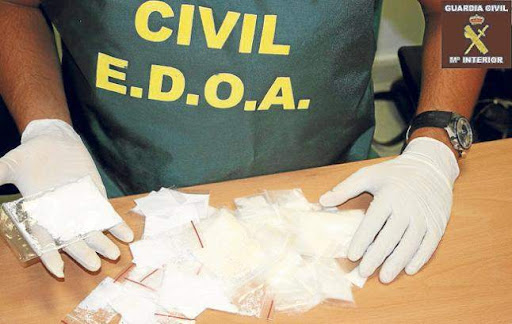
The Organised Crime Squad ECO of the Guardia Civil based on Mallorca completed the second part of an operation against drug trafficking on Sunday. The first part of the operation had been started at the end of August. At that time ten Britons were arrested and on Sunday the ECO agents picked up another ten youngsters of the same nationality. Judicial sources say that seven of the ten were sent to prison in Eivissa, on remand, while two were granted bail of 10,000 € and one was released without bail. Reporting restrictions have been imposed in the case. And in a separate case on Saturday the Guardia Civil have arrested a British man in Sant Antoni, Ibiza found to have 300 ecstasy pills hidden in his hotel room. The investigation is being handled by the Judicial Police of the Guardia Civil. We also have more details about a Guardia Civil drugs raid last Wednesday, also in Sant Antoni, when four homes were searched in the second phase of the Rula operation. 5 kilos of cocaine was recovered along with 5,000 ecstasy pills, and ten more arrests were made. Diario Ibiza reports that all those arrested are men, nearly all of them young and also British, although there are some Irish in the group. Judge Carmen Martín in Instruction Court 3 in Ibiza took their statements on Sunday.

Strong dollar and low inflation make UAE expats a happier lot


The global economy may not be giving out the brightest of signals (don’t even look towards Europe), but expatriates in the UAE are keeping their fingers crossed as a stronger US dollar – to which the UAE dirham has a fixed peg – and a low inflation rate, thanks to declining rents, are heralding a feel-good factor they’d all but forgotten in the past few years. The US dollar has gained significant momentum in the past few months, and has led to the UAE dirham appreciate in tandem against currencies in which expats remit money home, leading to welcome monthly savings by expats. At Rs13.11 at 9.30am this morning, the Indian rupee, for instance, is trading at a two-year low against the dirham (the INR last traded at the same level against the UAE dirham in late September 2009). The Pakistani Rupee (PKR), on the other hand, is at an all-time low against the dirham, with Dh1 fetching as many as PKR23.9 as of Tuesday. The British pound, too, has lost ground against the US dollar – in effect, against the UAE dirham – and is currently trading at AED5.78 for £1, a level not seen since mid-January this year. Similarly, the Philippines Peso is trading at PHP11.90 vs Dh1, its lowest level since mid-March this year. Rental relief While the strong US dollar implies that expats with fixed monthly commitments back home – be it mortgage payments or family sustenance allowances – are making incremental savings on their remittances, what is really adding to their bank balance is perhaps the lower annual rental payments, which have declined substantially over the past two years. From the crazy days of early 2008, rents in the UAE – though still high compared to other property markets at a similar stage of development – have declined by 50 to 60 per cent in certain cases. With a vast majority of UAE expats living in rented accommodation, this has led to a substantial boost to their finances while at the same time pushing down debt levels in the country. Banking on growth According to UAE Central Bank statistics, bank deposits rose to an all-time record of Dh1.126 trillion in the first half of 2011, compared with Dh985.4b in the first half of 2010 – a growth of 17 per cent year-on-year. At the same time, overall bank lending (including loans to businesses) are witnessing a slowdown too, with loans and advances by banks up just 3 per cent in the same 12-month period. On the other hand, personal loans availed of by residents inched up by less than 1 per cent during the same period, from Dh245.6b in June 2010 to Dh248b in June 2011 – indicating that we are saving more and borrowing less now. Spending vs saving While this may bode well for the residents in the short-term, Keynesian economics suggests excessive saving, i.e. saving beyond planned investment, is a serious problem, encouraging recession or even depression. According to experts, excessive saving results if investment falls, perhaps due to falling consumer confidence and/or demand, over-investment in earlier years, or pessimistic business expectations, and if saving does not immediately fall in step, the economy declines, or stops growing. Saving in effect means not spending all of one’s income. Thus, it means insufficient demand for business output, unless it is balanced by other sources of demand, such as fixed investment – a recurring savings account or a fixed deposit in a bank, for instance. While such an account is ‘savings’ for one person, it gives the bank the freedom to lend the same money to another individual or a company for business purposes, plugging liquidity back into the general economy, which boosts growth. But in case of a lack of borrowing demand – as seems to be the case now – excessive saving corresponds to an unwanted accumulation of inventories, or what classical economists called a general glut. This glut in inventory eventually leads businesses to decrease production and then employment levels, leading to a fall in household income levels, and the beginning of a new recessionary cycle. A number of residents who saw their friends or friends of friends lose jobs or generally get into financial trouble in the recent past with the economic slowdown went into auto-savings mode – fearing the worst, they downsized their expenses and started saving for the rainy day. They became prudent in their expenditure. But at some point in their savings spree, prudent became paranoid – weekly grocery shopping bills began being overanalysed (did we really need the room freshener?); in some cases, non-working spouses returned to their home countries along with the kids to avail of complimentary (or at least less expensive) schooling there, and working individuals shifted to smaller accommodations, further cutting down on rents. But with things improving (incrementally and relatively), it may be time to stop being ‘paranoid’ and start being ‘prudent’ about your finances again. We are certainly not suggesting that you start splurging now in a bid to boost the overall economy – far from it – but do relax those purse-strings a little bit to once again enjoy some of the things that money can buy.

Monday, 19 September 2011

UK Home Office considering gender-neutral passports


The Home Office has said it is considering the possibility of not displaying gender on passports. The proposals follow changes to Australian passport rules, which mean that intersex people who identify as neither gender can be listed as ‘X’, rather than having to choose between male or female. A Home Office spokesman said: “We are exploring with international partners and relevant stakeholders the security implications of gender not being displayed on the passport.” Currently, transgender people can obtain passports in their new gender. But intersex people – those born with chromosomal or genital ambiguity – must pick whether they are male or female. Supporters of gender-neutral passports say there is little need for passports to list gender and argue that other forms of ID do not state the information. Intersex rights campaigner Jennie Kermode told PinkNews.co.uk last week that the change would be easy to implement. She said: “The passport offices in the UK will not issue passports with the ‘X’ option now, although they could do so without, as I understand it, any necessary change in UK laws.” Another campaigner, Jane Fae, said: “The issue of documenting gender goes much wider than the ‘feelings of trans and intersect people’. In fact many in the trans community would oppose the removal of gender as its inclusion on passports is vital to ensure safety when travelling abroad. “Many non-trans individuals would be happier not declaring gender for all sorts of reasons. It should be optional for all.”

Ms Moran, 56, looked a shadow of her former self as she arrived to face 21 charges at Westminster Magistrates’ Court in central London.


One count alleges that she falsely claimed £22,500 for dry rot on a home in Southampton more than 100 miles from her constituency.

The former Labour member for Luton South sobbed throughout the brief hearing and was passed a tissue by a court official.

No plea was entered and jurisdiction in the case was declined by District Judge Daphne Wickham on the grounds of the nature and complexity of the charges and sums involved.

They allegations consist of 15 counts of false accounting and six of forgery.

Moran, of Ivy Road, St Denys, Southampton, was remanded on unconditional bail to appear at London’s Southwark Crown Court on October 28 for a plea and case management hearing.

The former politician spoke only briefly, in a faltering voice, to confirm her name and date of birth.

Moran looked almost unrecognisable as she arrived at court this morning with a dark grey beret over her head, wearing glasses, and clutching a handkerchief to her mouth.

The auburn tresses and bright clothes seen in previous photographs were replaced by a sober dark suit and blonde hair.

In court she continued to sob into a handkerchief as she waited for the hearing to start.

The criminal probe into Moran began after an investigation by The Daily Telegraph.


Margaret Moran in May 2009 and arriving at Westminster Magistrates Court today (PA/NICHOLAS RAZZELL)

66 year-old Daniel Healy was found by police to have 100kg of cannabis resin, said to be worth £500,000, hidden in the water tank of the campervan he was driving


66 year-old Daniel Healy – or ‘Mad Danny’ as he is known in Ardfern in Mid Argyll – was arrested last week, as he went to drive across the border between Morocco and Ceuta, a Spanish owned city enclave. Healy was travelling under the false name of John McLeish and was found by police to have 100kg of cannabis resin, said to be worth £500,000, hidden in the water tank of the campervan he was driving, protected in metal containers. Since his arrest he has been held in the Moroccan prison of Tetouan, said to be worse than Guantanamo.

Saturday, 17 September 2011

Former MI6 chief says ministers approved Gaddafi links


Sir Richard Dearlove, who was head of MI6 when British agents helped to send Muammar Gaddafi's opponents back to Libya, where they were tortured, said on Thursday that intelligence co-operation with countries with poor human rights records had always been cleared by ministers. "It has always been pretty clear that our governments in the UK have accepted that danger and difficulty and have given political clearance for that sort of co-operation," he told a meeting of the Henry Jackson Society, a foreign policy international thinktank. Whitehall officials have already insisted that intelligence cooperation with Gaddafi's Libya was authorised by ministers. However, Labour ministers at the time, including Tony Blair and Jack Straw, have distanced themselves from MI6's co-operation with Gaddafi's security services, as has Lady Eliza Manningham-Buller, then head of MI5. Dearlove said that MI6's co-operation with Gaddafi's regime against extremism was "uncomfortable" and "pragmatic". But he denied MI6 enjoyed a "cosy" relationship with the regime. He said that MI6 had had "phenomenal" success in disarming Libya, which had succeeded in acquiring the infrastructure needed to begin a nuclear weapons programme from the rogue Pakistani scientist, AQ Khan. "I resent the suggestion the relationship with Gaddafi was cosy," he said. "It was not a cosy relationship, it was a pragmatic one." Dearlove added: "It was a political decision, having very significantly disarmed Libya, for the government to co-operate with Libya on Islamist terrorism. The whole relationship was one of serious calculation about where the overall balance of our national interests stood." Papers found abandoned in the Tripoli offices of Moussa Koussa, Gaddafi's former foreign minister and intelligence chief, showed how MI6 was involved in sending suspected extremists back to Libya. They included Abdul Hakim Belhaj, a former prominent member of the Libyan Islamic Fighting Group, which had links with al-Qaida, and who is now military commander in the Libyan capital. Referring to the forthcoming Gibson inquiry into allegations that British security and intelligence agencies colluded in the torture and abuse of terror suspects, Dearlove said that he should not say more about co-operation with countries which did not share the UK's views about human rights. Dearlove said he was surprised by the relative failure of violent Islamism to make a more lasting political impact. North Africa and the Middle East showed al-Qaida had failed to achieve the long-term political impact many people had predicted at the time of the 9/11 attacks in 2001. He said the terrorist network appeared to be "on the back foot" and was struggling to mount operations in the developed world. "I think it faces an issue of credibility. It badly needs to demonstrate to its sympathisers and its core membership that it can pull off something really big," he said. He said he believed al-Qaida had made a "serious tactical error" in taking on the Americans in Iraq when they would have been better off trying to mount more 9/11-style attacks. "I think it was a vision of taking on the US military. Once the US military got its act together, it came out of that confrontation very badly," he said. He insisted the west had been right to respond in the way it did to the events of 9/11, even though it resulted in the radicalisation of many Muslims. "Confronting al-Qaida was a confrontation of beliefs and values. I think it was the right thing to do, despite the risks, to come out on the front foot to meet that threat militantly," he said.

Manchester dad could be facing the death penalty after being arrested on suspicion of drug smuggling in Indonesia.


 Jack Walker, 53, is being held in jail after being stopped at the airport in the capital Jakarta. It is understood the father of two – who is well known for taking meat around pubs near his home in Wythenshawe – was arrested as he was about to board a flight back to the UK. Officials allegedly found a substantial amount of methylamphetamine – commonly known as crystal meth or ‘ice’. It is believed the drug was found in a concealed compartment of a suitcase. Mr Walker, who is a diabetic, collapsed after he was  stopped.  It is understood his family are anxious he may not be receiving the correct medication to control his condition while in custody. A friend of the family said: “He is well known in the area – he drops off meat at the pubs and clubs. “The family fear he could be facing the death penalty or 20 years in jail. They are desperately trying to get help but say no one is listening. “He has a wife and two children. Apparently someone should have gone with him when he went abroad but pulled out. “He needs medication for his diabetes. Everyone around here is shocked by this. “He is not the kind of guy that you would expect would get involved in anything like this.” Another friend and neighbour, who asked not to be named, said: “We’re really shocked - it’s unbelievable. “My husband and I are devastated - we’ve known Jack for 19 years. He's never been in any trouble. I feel so sorry for him. It’s such a shame I just wish they could bring him back here.” A Foreign Office spokesman said: “We are aware of the arrest of a British national at Soekarno-Hatta International Airport in Indonesia. Consular assistance is being offered.” He confirmed that the death penalty was used against convicted drug smugglers in Indonesia. The country has some of the toughest anti-drug laws in the world with capital punishment for trafficking and 10-15 years for drug use. Mr Walker was arrested at the end of August.

Polo Experience at Tres Rosas Polo


Tres Rosas Polo offered the chance to try some horse riding as well as the opportunity to play a very popular sport called Polo. Polo is a team sport played on horseback and the players score by driving a small white plastic or wooden ball into the opposing team's goal using a long-handled mallet. The traditional sport of polo is played at speed on a large grass field up to 300 yards in length, and each polo team consists of four riders and their mounts.    Personally, I must admit I was a bit intimidated by the whole thing, since my only(and very brief) experience with horses was more than 10 years ago. Getting up the horse and heading to the field already raised a fair amount of adrenaline in me, but the peak was reached once my horse started to gallop. Let's just say it isn't as easy at it looks and for me the fear of falling was the biggest!    Thankfully my horse, Todo, let my first experience be totally positive, even though I was not sure at all what I was doing. What they told me was that the horse can sense if the rider is insecure and totally in charge. That is the reason also why she didn't obey 100%. Nevertheless, riding the horse with the mallet in the right and leading the horse with my left hand made me feel like a polo player, even if it was for only 15 minutes!    I definitely suggest this type of sport to anybody who loves to try something different and Tres Rosas Polo club is the right place to take up this interesting hobby that is played professionally in 16 countries!

Thursday, 15 September 2011

At least two die in fire on Norwegian cruise ship


Two crew members have died in a fire on a cruise ship off the coast of Norway. At least a dozen people were injured, two seriously, as the blaze forced rescuers to evacuate more than 200 passengers from the ship, the Nordlys. The ship was sailing close to the port of Aalesund in western Norway when a fire broke out in the engine room. Police believe there was an explosion, but do not know what caused the blast. Some people were taken hospital for treatment for smoke inhalation. Television pictures showed clouds of thick black smoke rising from the ship after it was taken to Aalesund. The Nordlys, which belongs to the Hurtigruten company, was sailing northwards from Bergen to the Arctic circle when it caught fire. All 207 passengers were rescued. The ship can carry nearly 700 passengers. Some of the 55 crew members remained on board to help firefighters battle the blaze. "The fire is under control now but we have a problem with the ship taking on water so right now they are working on stabilising the vessel," a spokeswoman for the rescue services in southern Norway, Borghild Eldoeen, said. The nationalities of the passengers were not known, but most of the tourists on Hurtigruten ships are from Norway.

Tuesday, 13 September 2011

Businessmen guilty of £8m "boiler room" shares scam share-selling was undertaken by salesmen working from Marbella and Barcelona,


share-selling was undertaken by salesmen working from Marbella and Barcelona, although many of them used false names and claimed to be calling from offices in Frankfurt, Stockholm or Amsterdam. The SFO said the business prospects of the company were inflated by WBR’s directors and salesmen. WBR eventually went into adminstration in 2007 following a petition by creditors. It is now officially in liquidation. Of the £8.2m attracted from investors, about £4m ended up in off-shore accounts in Cyprus, Jersey and Spain, the SFO said. It began its investigation after complaints from people who bought shares. WBR was later included on a warning list published by the Financial Services Authority. SFO director Richard Alderman said: “Boiler room fraudsters prey on vulnerable people, they also deprive genuine businesses of the capital they need to grow. Quite bluntly, they ruin lives. I am delighted that the SFO is playing its part in bringing down operations like these and bringing fraudsters to book

Monday, 12 September 2011

Spanish-based Seven guilty of 'boiler-room' fraud


Seven men were convicted today of an £8 million boiler-room fraud, the Serious Fraud Office (SFO) said. The Spanish-based operation targeted thousands of investors in the UK applying high pressure telesales techniques to push shares in a bio-diesel company, Worldwide Bio Refineries (WBR). In fact, the company was practically worthless. One defendant, company director Redmond Johnson, 66, pleaded guilty to conspiring to defraud investors. Fellow director Dennis Potter, 72, who lived in Singapore, was convicted of the conspiracy along with John Murphy, 35, and Greg Pearson, 38, both of Marbella, Daniel Murphy, 37, and Lee Homan, 37, both of Hertfordshire, and Peter Bibby, 44, of south London, who all managed share sales. Bibby absconded before the Ipswich Crown Court trial and was convicted in his absence. There is a warrant for his arrest. Commenting on the convictions, SFO director Richard Alderman said: "This is an excellent result. Not only do boiler-room fraudsters prey on vulnerable people, they also deprive genuine businesses of the capital they need to grow. "Quite bluntly, they ruin lives. I am delighted that the SFO is playing its part in tracking down operations like these and bringing fraudsters to book." WBR was set up in 2003 and had a processing plant in County Durham that was purported to produce diesel fuel from vegetable matter. It also had a plant in Singapore producing diesel intended to be marketed in the UK. The share selling was undertaken by salesmen working from a number of boiler-rooms in Marbella and Barcelona although many of them used false names and claimed to be calling from offices Frankfurt, Stockholm or Amsterdam. The business prospects of the company and the bio-diesel market were inflated by WBR's directors and the salesmen, who claimed that substantial international business was being done and that the business's shares were valued at £110 million. Investors believed that their investment in a successful bio-diesel enterprise would net them significant short-term returns, bolstered by claims that WBR was to be floated on the stock market. These claims were bogus. The SFO found that the bio-diesel plant had no output and, with only limited imports coming from the Singapore plant, WBR was not being managed with any intention of it becoming a growing commercial success. Virtually all of WBR's revenue between 2005 and 2007 was generated by share sales. Of the £8.2 million attracted from investors, around £4 million was transferred to accounts in Cyprus, Jersey and Spain for the benefit of the boiler-room salesmen. The group will be sentenced at Ipswich Crown Court on September 23.

Sunday, 11 September 2011

Three Britons face a total of 27 years in prison for drug trafficking


Málaga Prosecutors’ Office has asked for a total of 27 years in prison for three British men who are accused of trafficking in cocaine. The three, who also face a 3.6 million € fine each, were found with some 15 kilos of the drugs, and one of them is also accused of document falsification for being found with fake passports. The value of the drugs intervened has been estimated at 900,000 €. Europa Press reports that the provisional conclusions of the prosecutor reveal that one of the men was caught by the National Police in Alsasua, Navarra ‘when he was transporting 15 packets of the drug in a rucksack, while driving an articulated lorry. The prosecution alleges that the transport had been agreed with the other two Britons, and the three had intended to sell the drugs to a third party. The oral hearing for the case is expected to get underway in Section Nine of the Provincial Court in Málaga on the 14th of this month.

The Liberal Democrats' biggest donor, who has been on the run for three years after being convicted of a multimillion pound theft, is hiding in the Dominican Republic under a false British identity

Michael Brown
Michael Brown has been on the run for three years after being convicted of a multimillion pound theft. Photograph: Rex Features


Michael Brown, 45, the convicted Glaswegian who bankrolled the party with £2.4m of stolen money, is being sought by British authorities on the Caribbean island but is currently at large. Brown disappeared from Britain while on parole and was sentenced in his absence to seven years in prison.

The disclosure of Brown's bolthole will be an embarrassment for Nick Clegg. His party has refused to compensate Brown's victims, some of whom claim their money went directly into the party's coffers to finance the 2005 election campaign.

City of London police detectives have been in talks with the Crown Prosecution Service over how to bring back Brown. The Dominican Republic does not have an extradition treaty with Britain. The Home Office is believed to have approached its government for help in apprehending him.

While on the island, Brown has been based in the province of La Altagracia, the easternmost tip of the Republic close to some of its most beautiful beaches.

One source with knowledge of Brown said he has lived a low-key but pleasant life. "His businesses have been doing OK. He has lived in a wealthy area, he loves the beaches and he plays golf on some of the world's best courses. It could be worse."

Brown, who was using an alias, was held on remand by the Dominican authorities while he was investigated over an oil deal. Court papers from the country's capital in Santa Domingo show he was accused by a Dominican businessman in February of failing to honour a contract for 4,820 tonnes of oil.

He was ordered to be held for three months while the investigation continued. Its outcome is not known.

It has also been established that he launched a real estate business in 2008 based in the Republic, and has launched a subsidiary in Nassau in the Bahamas.

Michael Robert Alexander Brown appeared from nowhere when he approached the Liberal Democrats in November 2004 with a generous offer of money for Charles Kennedy's impending election campaign.

The brash, ponytailed Brown claimed to be an offshore trader living in Majorca. His claimed his clients were vetted by US embassy officials. Despite not being a party member, not being registered to vote and living abroad, he was welcomed with open arms by the party's grandees. Money came through his company, 5th Avenue Partners, in four tranches. It remains the biggest donation ever received by the party from an individual.

In the general election, the party increased its share of the vote by nearly 4% after the cash was spent on posters and advertising.

Brown told journalists that he had given the enormous donation because he liked Kennedy. "Charles is my kind of man. And I like to see a level playing field," he said.

Within months, Brown was flying Kennedy across Britain in a private jet and was being invited to dinners in Mayfair. Former Lib Dem insiders say he dazzled them with stories of Gordonstoun public school and St Andrew's University.

In fact, he had failed his maths O-level at his local school and completed a City and Guilds in catering at Glasgow College of Food Technology. He had no US government links – although he was wanted in Florida for cheque fraud.

Brown was arrested in late 2005 after four former clients came forward claiming he had duped them out of more than £40m in a high-yield fraud.

His victims included Martin Edwards, the former Manchester United chairman, who had invested £8m with 5th Avenue Partners.

In June 2008, while awaiting trial for theft, false accounting and perverting the course of justice, Brown fled and a warrant was issued for his arrest.

In the weeks before he disappeared from his Hampstead bail address in north London, he changed his name on the electoral roll to Campbell-Brown and allowed his hair to turn grey.

In his absence the court was told that the political donation was made to impress clients and create an air of importance and influence around Brown.

The disclosure of his whereabouts has given hope to Brown's victims who are still owed millions.

A copy of the passport that Brown has been using has been obtained by the Guardian. It shows a noticeably older and gaunt Brown, sporting dark hair and a goatee beard, compared with photographs taken four years ago when he was awaiting trial. He is believed to have adopted someone else's real identity which has been obscured at the request of the police.

Tony Brown, managing partner at law firm Bivonas which represents US attorney Robert Mann who was lost more than $5m (£3m), said: "This development may allow us to pursue Brown's assets in the Dominican Republic for our client."

Mann's legal team was forced last year to drop a high court claim against the Lib Dems for the return of around $600,000 after running out of funds. He hopes that if Brown is returned to Britain, any subsequent court case could cause further uncomfortable questions for the party.The Liberal Democrats have maintained that the money was received in good faith and have been cleared by an Electoral Commission inquiry into Brown's donations.

A police investigation has been launched this week into how Brown fraudulently obtained a passport. A spokesman for City of London police declined to comment. The Home Office declined to comment.

Saturday, 10 September 2011

Pensioner shot dead on a bench in Torremolinos


man in his seventies is under arrest after shooting a 79 year old man dead while he was sitting chatting with a friend on a public bench in Torremolinos. It happened in broad daylight at around 7 on Wednesday evening in the Plaza Costa del Sol in the town centre. The victim, 79 year old from Ciudad Real who Málaga Hoy newspaper said has a holiday apartment in Torremolinos, was shot at point blank range in the back of the head. His killer is a man from Cádiz province who lives locally and has a previous criminal record. He was arrested near the scene shortly afterwards, still carrying with him in a bag the shotgun he had used for the murder. There is no clear motive for the murder as yet, although friends of the victim said it could have been an argument over the sale of a property. There are unconfirmed reports from Público that it was an argument over a game of dominoes.

Thursday, 8 September 2011

Soldiers may face Mousa prosecution


British soldiers could face a fresh prosecution over the brutal death of an Iraqi civilian after a scathing report condemned the "shameful" abuse of prisoners in UK custody. A landmark public inquiry concluded that father-of-two Baha Mousa, 26, died after an "appalling episode of serious gratuitous violence" meted out by members of 1st Battalion the Queen's Lancashire Regiment (1QLR). Inquiry chairman Sir William Gage said a number of British officers who could have stopped the abuse, including 1QLR's former commanding officer Colonel Jorge Mendonca, bore a "heavy responsibility" for the "grave and shameful events". He also strongly criticised the "corporate failure" by the Ministry of Defence that led to "conditioning" techniques banned by the UK in 1972, including hooding and making prisoners stand in painful stress positions, being used by soldiers in Iraq. The £13 million public inquiry, which has published its 1,400-page final report, condemned the "lack of moral courage to report abuse" within Preston-based 1QLR. It named 19 soldiers who assaulted Mr Mousa and nine Iraqis detained with him, and found that many others, including several officers, must have known what was happening. The damning report said the violence could not be described as a "one-off" because of evidence that 1QLR troops abused and mistreated Iraqi civilians on other occasions. Lawyers for Mr Mousa's family called for the soldiers responsible for his death to face charges in the light of the findings. Seven members of 1QLR, including Col Mendonca, faced allegations relating to the mistreatment of the detainees at a high-profile court martial in 2006-07. The trial ended with them all cleared, apart from Corporal Donald Payne, who became the first member of the British armed forces convicted of a war crime when he pleaded guilty to inhumanely treating civilians. Payne was acquitted of manslaughter. The legal team for Mr Mousa's relatives and the other detainees believe that evidence in the inquiry's report could form the basis for a new prosecution. Sapna Malik, from law firm Leigh Day and Co, said: "In light of the cogent and serious findings by Sir William Gage, we now expect that the military and civilian prosecuting authorities of this country will act to ensure that justice is done." The Crown Prosecution Service said the inquiry's report had not been referred to it. The Service Prosecuting Authority, which brings military prosecutions, was not available for comment.

Wednesday, 7 September 2011

Southend men held in Spain moved to new prison wing


TWO men who are being held in Spain on suspicion of attempted murder have been moved to a new prison wing with better conditions. Kyle Thain, 24, of Sandringham Road, Southend, and James Harris, 29, of Pelham Road, Southend, have been moved to a new wing of Fontcalent prison, Alicante. The pals, who have been held without charge since July 8, have been relocated to Modulo Respecto, a part of the jail which should make life a little easier for them as they fight for freedom. Jay Thain, 29, Kyle’s older brother, said: “The new wing is for people who are better behaved. It is a lot cleaner and the food is better. “They have a lot more facilities. There is a proper gym and a table tennis table, it is much better for them.” Mr Thain said his brother and James are doing as much as they can to help keep themselves occupied, stay positive and pass the time. He said: “They are trying to learn Spanish and Kyle is drawing.” Kyle and James were arrested as they went to board a plane home after a lads weekend away. The friends, both former pupils of the King John School, Thundersley, are accused of beating up and stabbing two men in a bar near where they were staying. However, the pair maintain they never even went to the bar and their families say there has been a terrible case of mistaken identity. Since the lads were arrested Jay has worked tirelessly, with the help of family and friends, to get both men back home. Sharon Harris, Kyle’s mum, has put her house in Brunswick Road, Southend, on the market to help towards legal fees, which have already topped £10,000. Meanwhile, family and friends have been busy organising a series of fundraising events. James and Kyle, along with another pal Joe Elliot, 24, landed in Cabo Roig on Friday, July 1. All three were quizzed on Tuesday, July 5, at Murcia Airport before Kyle and James were held on suspicion of attempted murder. A getaway car used by the two attackers is still being sought by Spanish police and once found is likely to help with the case. Jay said: “In August everything shuts, the court circuit closes and nothing gets done.”

British expat arrested in Phuket today was on a list of fugitives wanted by an international division of the UK’s Serious Organized Crime Agency (SOCA)

Paul Ridden in detention in Phuket. Photo: Lars Goran Dikander.

PHUKET: A British expat arrested in Phuket today was on a list of fugitives wanted by an international division of the UK’s Serious Organized Crime Agency (SOCA), the Phuket Gazette has learned.

Paul Ridden, 58, was arrested today after being fooled into meeting a friend in front of Chalong Police Station.

When he drove into the police station car park, his exit was blocked by other vehicles behind him.

“When he pulled up, Tourist Police volunteer Gary Halpin reached in and removed the key from the ignition,” said fellow volunteer Jum Ali Khan.

The move to lure Mr Ridden to capture today follows a Chalong Police attempt to bring him in for questioning yesterday after a fellow expat complained of being cheated out of 75,000 baht.

Sussex Police in the UK appealed to the public for help in finding Mr Ridden in June after he jumped police bail in April.

The appeal, which said Mr Ridden was wanted for “numerous fraud offenses”, was carried nationwide, including on the BBC website.

The appeal was issued by Detective Constable Rick Kent, Senior Officer, Operations, of SOCA’s Middle East and Asia division.

Speaking to the Phuket Gazette tonight, Mr Ridden confirmed that he had been contacted by the British Embassy in Bangkok, but he declined to answer any questions related to why he was wanted by the UK authorities.

After taking Mr Ridden into custody, Police Col Boonlert Onklang noticed that the Eastbourne native had overstayed his visa.

Mr Ridden will spend tonight in detention at the station, and will be presented in court tomorrow to face a fine for his immigration infraction.

However, that may not be the end of his problems in Phuket.

At least six people were lining up at Chalong Police Station tonight to file complaints against him.

All the complaints related to Mr Ridden having allegedly deceived or cheated the plaintiffs out of money.

One woman told the Gazette that he borrowed her motorbike and then rented it out to tourists.

Mr Ridden also hired cars from local rental operators, then rented them out to tourists, “like subletting,” one man said.

“There are eight cars in total,” he added.

Another person ready to file a complaint said he rented a car from Mr Ridden and was still waiting for his deposit to be returned. “That was two weeks ago,” he said.

Yet Mr Ridden claimed that he himself was a victim of deceit.

“I was just trying to run a business in Thailand. What happened was that the guy I came to work with said he would get me a work permit, so I gave him 65,000 baht. That was three months ago," he said.

Mr Ridden said that he was working with a local firm that installs CCTV systems.

“I was like a sub-agent. I was getting the job and they were fitting it. Their manager told me that he could get a work permit for me if I worked for them for a year, so I gave him the money. But the boss never knew about it,” he said.

“The paperwork that was signed – which I still have – was all forged by the manager. And they know about it. That’s how it all started,” he said.

Mr Ridden said that the 75,000 baht involved in the original Phuket complaint was saved in a bank account.

“The money was for getting the man a visa, but he found a cheaper way and decided to do it himself. But to get the visa [the man wanted], he needed to have money in a bank account, and that’s where it is. I will give it all back,” he said.

He also said that he had been in touch with several people – and in front of the Gazette he specifically asked for certain people to come and see him – so he could give the car registration books back.

Mr Ridden also asked that the Thai man he had hired to help him to run his business not be involved, especially since the Thai man’s wife was one month pregnant.

Monday, 5 September 2011

talkSPORt to be broadcast to British troops stationed overseas


talkSPORT commentary on the Rugby World Cup 2011 is to be broadcast to British soldiers serving overseas, the British Forces Broadcasting Service has announced. Coverage commences on September 9 and will enable troops stationed in more than 20 countries; including Afghanistan, Gibraltar and the Falkland Islands, to keep up to date with all the games as they are played. England legend Brian Moore, aka The Pit Bull, will be heading up talkSPORT's coverage for the tournament alongside David Campese. He said: “The Rugby World Cup is a massive event and is sure to be a fantastic spectacle – I’m really pleased to be supporting our brave troops abroad.” BFBS Controller Nicky Ness said: “I am delighted that the BFBS and talkSPORT partnership now extends to Rugby World Cup coverage.  This tournament is really important to the armed forces community for whom sport is crucial part of life.  The fact that our troops will be able to listen on the front line and in far flung corners of the world will make a real difference to morale.

Friday, 19 August 2011

A teenage waiter knifed two British women to death in Turkey after one refused to let him marry her 15-year-old daughter.


The obsessed 17-year-old lured the women to a secluded wood where he cut their throats. The girl, Shannon Graham, had been dating Recep Cetin for two years. He was said to be ‘totally infatuated’ and ‘very possessive’. 

Last week her mother Marion, 53, had a blazing row with Cetin, who uses the name Alex.

Suspect: Suspect Recep Celik, left, is accused of killing the mother of his girlfriend Shannon Graham, pictured, in a frenzied attack

Suspect: Suspect Recep Celik, left, is accused of killing the mother of his girlfriend Shannon Graham, pictured, in a frenzied attack


Marion Elizabeth Graham in Izmir, Turkey, was allegedly stabbed to death by her daughter's boyfriend
Kathy Dinsmore was allegedly stabbed to death in Turkey over an alleged row about her friend's daughter's boyfriend

Recep Celik is accused of stabbing Marion Graham (left) and Kathy Dinsmore, both 54 and from Northern Ireland 

After he kicked Shannon during an altercation, Miss Graham ‘went ballistic’ and told him never to lay a finger on her daughter again.

The waiter apparently responded by threatening to kill Miss Graham if she came between him and Shannon.

Last night Turkey’s state-run news agency Anatolia said Cetin had confessed to killing Miss Graham and her friend Cathy Dinsmore, also 53, who both came from Newry, County Down, Northern Ireland.


Wednesday, 17 August 2011

Alain St Ange from the Seychelles Tourism Board says experts are joining the hunt for a shark that killed a British man on his honeymoon.

Ian Redmond, 30, was snorkelling just 30 feet off Anse Lazio beach on the island of Praslin in the Seychelles when he was killed.
His new wife Gemma Houghton, 27, who was sunbathing on the beach, heard his screams and witnessed the fatal attack.
It was the second fatal shark attack on the beach in less than a fortnight after the death of a 36-year-old French diver on August 2.


Tuesday, 16 August 2011

Prince Harry has revealed he did not inform the Queen of his daring trip to the Arctic in which he battled sub-zero temperatures in a punishing charity trek.

The 26-year-old has told of his father's nerves about the trip and suggested many of his advisors would have warned against the journey, in a region which has since seen a British student killed by a polar bear.
Prince Harry took part in the Walking With The Wounded trek in April this year with a BBC documentary to be aired this month following his journey.
In Harry's Arctic Heroes - to be screened on BBC1 - he admits: "My father obviously knew I was coming out here and so did my brother.
"But I kind of kept it quiet - I don't know why it happened - so my grandparents and the rest of my family probably just found out about it and they probably think I'm completely mad. It's probably right."
The expedition to the North Pole was undertaken by an unsupported team of wounded British soldiers, who covered 160 miles in 12 days with Harry joining them in the early days of the walk - less than a month before his brother William's wedding.


Friday, 5 August 2011

RBS wary of Greeks bearing bonds

After writing off £733m of Greek debt, the Royal Bank of Scotland has been conservative and pessimistic at the same time, showing little confidence in the "voluntary" deal struck between banks and eurozone political leaders.

That deal assumed a 21% loss on privately-held debt, but RBS assumes 50%.

Indeed, it assumed that at the end of June, since when a eurozone deal which was struck is now being treated with disdain by the markets for its lack of credibility.

How much more exposed could RBS be to the eurozone countries most in trouble?

Delve deep into its voluminous half-year figures, and you'll find some big numbers. It holds more than £7bn in Spanish government bonds, and another £8.5bn in private sector exposure in Spain, most of that to large corporates.

It's rather less exposed in Italy, with £3.5bn of private lending and £955m in government debt.

In total, its exposure to national and local government debt and derivatives across Ireland, Spain, Italy, Greece and Portugal is £3.3bn.

PIIGS in space
But the overall exposure, including private lending in those five economies, is a daunting £76bn.

Of that, nearly £43.5bn is exposure to lending in Ireland, where Ulster Bank has left a big exposure. There is nearly £22bn of exposure to personal lending in Ireland, most of that in residential mortgages, while RBS has relatively low exposure to Dublin government debt.

Its impairment charge on Ulster Bank's operations was £1.25bn, hardly down at all on the high figures revealed in the first quarter, as total impairments in the second quarter rose significantly on those in the first quarter.

It shows RBS is a lot more exposed to those PIIGS - Portugal, Ireland, Italy, Greece and Spain - than Lloyds Banking Group. In its half-year figures, it reported £189m exposure to central and local government debt in those troubled eurozone economies, though it also threw Belgium into the mix.

That's one worth watching. Belgium is carrying a high level of debt. At 97% of gross domestic product, it's behind only Greece and Italy within the eurozone.

And it has failed for more than a year to form a government because of the apparently intractable differences between the Flemish and the Walloons.

If the markets begin to bear down on Belgian debt - and that's already signalled by a bond spread more than two percentage points above the German benchmark - it could be brutal to a government where there is no government.

Negotiations on forming a government have taken a break while the king has gone on holiday, drawing criticism from Brussels' central bank governor.

Loan arranger
One other factor worth some digging in the RBS figures is the lending to business. The Project Merlin promise to boost lending in a bid to help the UK economy has seen banks making positive noises about their achievements since the deal was struck in February.

RBS says it is well ahead of its market share, but it isn't saying that it's actually hitting those targets. Instead, it has the look of a bank getting its excuses in early.

The problem seems to be mostly with small and medium-sized business lending, where the banks complain that it's hard to get customers interested in lending.

Instead, there are high levels of debt repayment. Drawn balances fell £1.2bn between the first and second quarters of this year, down to £53bn. Only in manufacturing and public administration did the SME figures rise.

RBS has £40bn in unused overdrafts with business customers. SMEs are using less than half of arranged facilities.

The Edinburgh bank cites survey evidence that 81% of SMEs had no plans to borrow in the following three months (perhaps because they know what the banks will be like if they try).

Only 2% said a lack of external finance was the main obstacle to running their business over that same time horizon.

Next week, there will be less spin of the figures, and we'll get a better idea of whether the Bank of England thinks the banks are achieving those lending targets.


Leandro Penna chose love over his life in Argentina


Katie Price and Leandro Penna | Pictures | Photos | New
Katie Price and Leandro Penna have moved in together in West Sussex with her 3 kids


Katie Price is flattered that boyfriendLeandro Penna sacrificed his career in his native Argentina to live with her in England.

The glamour girl and mum-of-three saysLeo, 26, is 'massive' in South America - working as a model and hosting a popular TV programme - so when he fell for Katie earlier this year, he had a major decision to make.

'He was like, "Look, I want to be with you",' says Katie, 33. 'So I said, "Well, I've got kids and my career as well".

'So he made the choice to move to England. He's not doing his presenting any more.

'He gave it all up for me.'

Jordan split from 2nd husband Alex Reid, 35, in January but quickly fell forLeandro at Elton John's Oscars LA afterparty in February.

'People think I've been with so many men,' Katie tells The Sun.

'I think it's because when I break up with someone, they make such a big thing about the next one, that in people's heads it's like, "Oh look, she's moved to the next one".'

Katie Price | Alex Reid | Now Magazine | Pictures

Blogger Themes

Related Posts with Thumbnails

Share

Twitter Delicious Facebook Digg Stumbleupon Favorites More